
Protect Your Plumbing
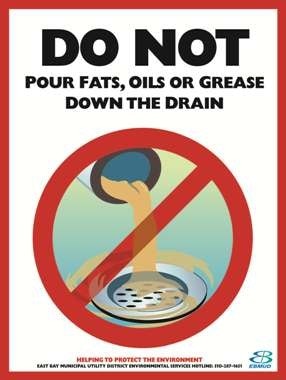
The purpose of the FOG Control Program is to prevent fats, oils, and grease (FOG) from entering the Mammoth Community Water District’s sewer system. FOG accumulation causes sewer backups and spills which are a threat to health and safety. FOG is difficult and costly to manage both in the sewer collection system and at the wastewater treatment plant. MCWD strives to minimize the amount of FOG entering the sewer through outreach and education, offering free supplies such as dish squeegees and sink strainers, and through the establishment and enforcement of regulations for the discharge of FOG and other insoluble waste. We thank you for working with us to provide sustainable service to the community.
Please remember the drain is not a trash can. It is in your best interest to keep FOG out of your pipes! Clogs and backups are very costly, and your pipes are your responsibility.
In case of a sewage spill, notify the District immediately by telephone at (760) 934‐2596. For questions about FOG use extension 232. Do not hesitate to reach out with any questions, we are always happy to chat.
Residential:
Your pipes are only designed to handle toilet paper and human waste. See Know your System for a helpful infographic.
Tips to keep your drains fat free:
- Pour fats, oils and grease into a container such as an empty jar, coffee can, soup can or empty caryons. Once the materials have cooled and solidified, secure the lid and throw it in the trash.
- Anything greasy, oily, or fatty (salad dressing, dairy products, etc.) should go in the trash, not down the drain. When in doubt, put it in the trash.
- Before washing dishes, scrape food scraps into the trash and use a paper towel to wipe FOG from pans.
- An in-sink garbage disposal should be used minimally. Use a sink strainer to catch food waste.
Commercial:
The FOG Control Program requires all Food Service Establishments (FSEs) to obtain a FOG Discharge Permit prior to any operations. FSEs must also notify the District in advance of any substantial changes to the FSE, property, menu, or operations.
Program Resources
- FOG Program Ordinance
- Grease Trap Sizing Worksheet
- Food Service Establishment (FSE) FOG Discharge Permit Application
FOG Training Videos
Know Your Responsibility
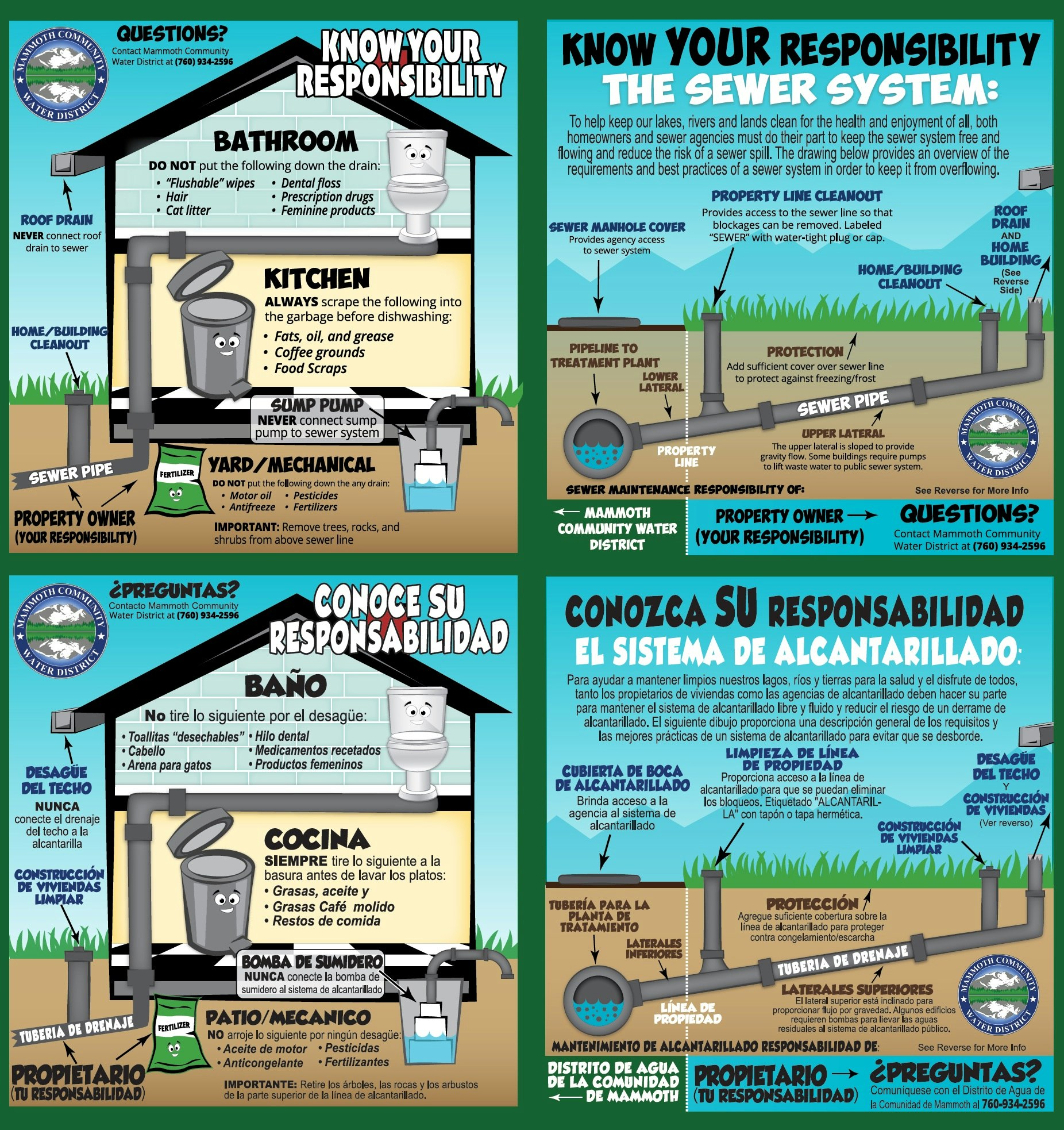
To help keep our lakes, rivers and lands clean for everyone to enjoy, we all must do our part to keep the sewer system free and flowing. Here is a nice overview of best practices of a sewer system in order to keep it from overflowing.
“Flushable” Wipes are Not Actually Flushable
We understand some products are labeled as "flushable" or "biodegradable" however wipes do not break down like toilet paper. All wet wipes and baby wipes should be put in the trash, not flushed down a toilet. Pipes and sewer systems are designed to handle human waste and toilet paper, not other products. The following should never be put down a drain or toilet: wipes, hygiene products, paper towels, food scraps, fats, oils, grease, hair, cat litter, dental floss, prescriptions, and chemicals. Improperly disposing waste down the drain can lead to sewer backups and spills. Plumbing repairs are expensive, and your pipes are your responsibility.
Come visit us, we have free strainers available for sinks, showers, and floor drains along with dish squeegees and other conservation items.
Winterizing Tips
With signifcant winter weather here in Mammoth Lakes, we would like to share some helpful tips in getting ready for the winter season. Explore our Winterizing Tips.
